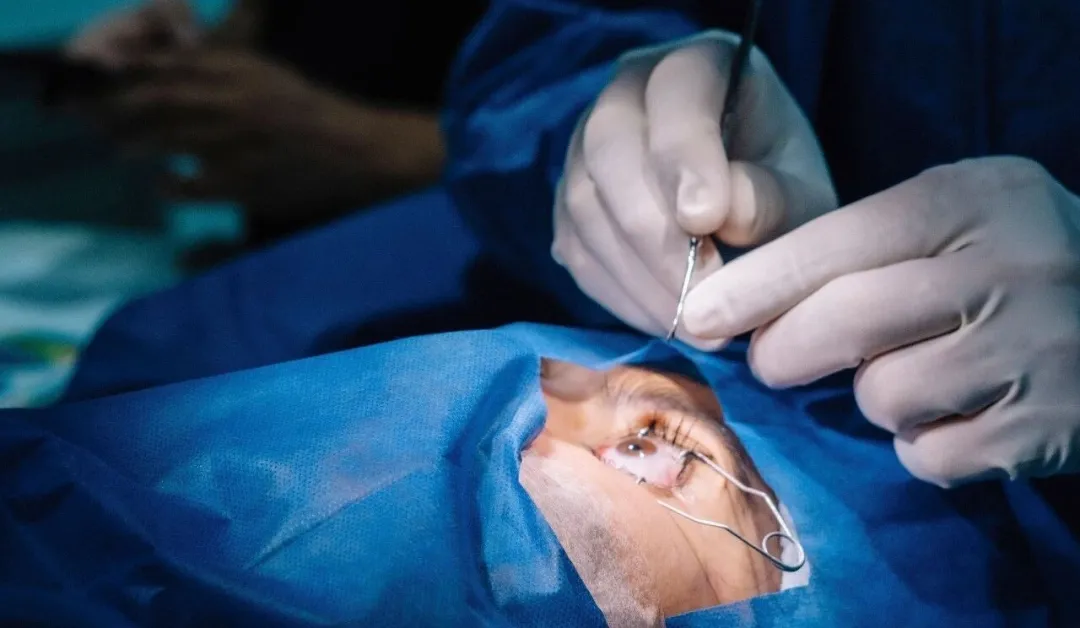
Before walking into the eye operating room, many patients cannot help but feel a little nervous:
"During surgery my eyes can't move around freely — so what if I suddenly feel like coughing, sneezing, or my tears just won't stop? Will these little urges affect the surgeon's work? Could they be dangerous?"
Don't panic. As operating-room nurses who work on the front line of eye surgery every day, we are here to give you a reassuring answer in the plainest, most practical language.
First, let's correct a very common misunderstanding:
Many people assume that eye surgery only "touches the eye" and that the rest of the body can move around freely. The truth is exactly the opposite. Eye surgery is a millimeter-level, precision operation. A slight movement of the eyeball, or a sudden jerk of the body, can introduce a hidden risk to surgical safety. So during eye surgery, always remember this rule: if you feel something or want to do something, say it in advance — don't force yourself to hold it in, and don't suddenly move.
If You Want to Cough or Sneeze During Surgery
Never hold it in!
If you suddenly feel the urge to cough or sneeze during surgery, never forcibly suppress it, and never cough hard on purpose either.
What to do instead
Immediately and gently say, "I need to cough," or signal the nurse with a hand gesture. The surgeon will pause the procedure and continue once you are steady again. You can also open your mouth and breathe deeply, pressing your tongue against the roof of your mouth to gently ease the irritation. If you really cannot hold back, give a small, soft cough — without turning your head or raising your shoulder.
This is a perfectly normal reaction. There is no need to be tense, and no need to feel embarrassed.
If You Cannot Help Tearing Up During Surgery
It is normal — don't wipe it yourself!
Many patients tear up involuntarily once they are on the operating table, and then panic, thinking something has gone wrong. In fact, in the vast majority of cases it is completely normal: the surgical light, the eye disinfection, the mild irritation from instruments, and nervousness itself can all make the tears flow.
Remember this one point: let the tears flow. Never raise your hand to wipe them, never squeeze your eyes shut, and never turn your head. The nurse will gently suction away your tears throughout — you don't need to do it yourself. The more you try to control it, the more tense the eye becomes, and the harder cooperation gets.
If Your Eyes Feel Sore, Full, or You Want to Blink
Do this and it is safest.
During the procedure you may feel your eyes getting sore or full, a strong urge to blink, or dryness. Don't panic — just follow these points:
Correct cooperation
1. Try to keep your eyes naturally open, looking at the light or the direction you are told, without forcing them shut.
2. If it really bothers you, softly tell the nurse, "My eyes feel a bit sore."
3. We will, as needed, put in lubricating eye drops to relieve the discomfort.
What you must never do: secretly blink or squeeze your eyes; move your eyeballs around at will; or use your hands to touch your face or the surgical drape.
If You Want to Speak or Move Your Body During Surgery
Remember one principle.
Throughout the entire surgery you may speak and breathe normally — there is no need to hold your breath. The only core principle is this: keep your head and eyes still. Anything else that feels uncomfortable, you can say.
Tell the doctor or nurse right away if any of these happen:
1. Palpitations, dizziness, or nausea.
2. Numbness in the hands, or the urge to turn over.
3. Thirst, chest tightness, or the urge to take a deep breath.
Any feeling that something is "not right" or uncomfortable can be spoken out — the doctor and nurse will handle it immediately. What you don't say is what lets a small problem grow into a bigger one.
The Takeaway
In eye surgery, success is half the doctor's skill and half the patient's cooperation. You don't need to be "perfectly still," and you don't need to force yourself not to be nervous.
You only need to remember:
Want to cough — say it first.
Want to tear up — don't wipe.
Want to blink — tell the nurse.
Feel uncomfortable — speak up right away.
With the patient cooperating well and the medical team guarding carefully, together we steady the course toward clear, bright vision. We wish every patient a smooth surgery, a calm recovery, and a renewed, clear world of sight.
At Shanghai HePing Eye Hospital, our operating-room and surgical teams provide structured, multilingual care for international patients undergoing cataract, refractive, and retinal procedures. If you have questions about preparing for eye surgery, contact us to plan a consultation that puts your comfort and safety first.